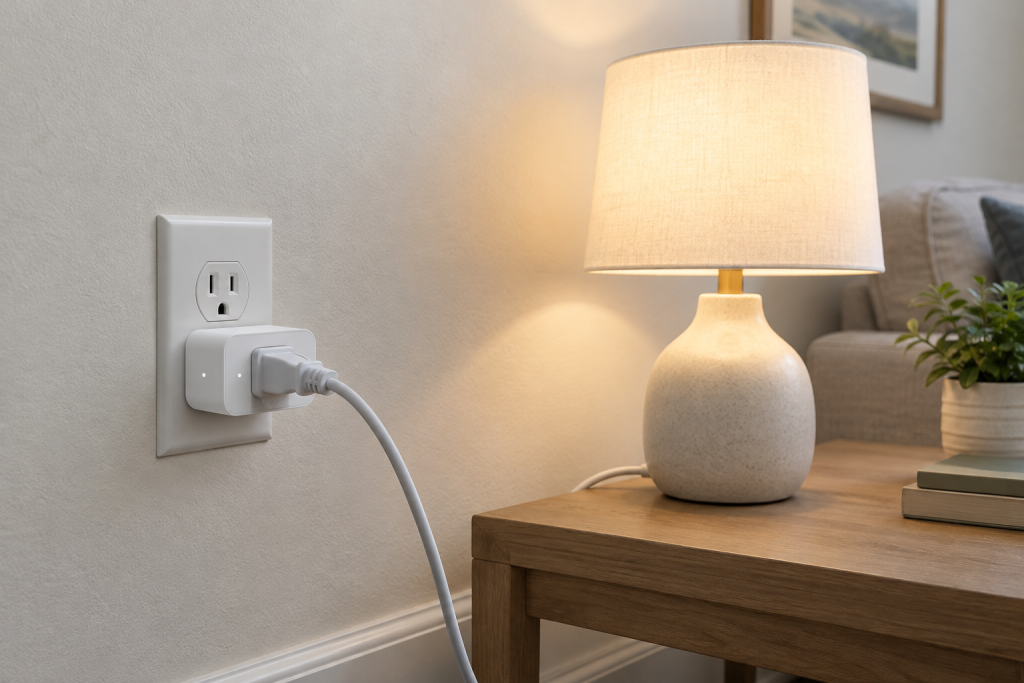
What a smart plug actually does
A smart plug does one job: it opens and closes the power path between the outlet and whatever is plugged into it. An app, a schedule or a voice command tells an internal switch to cut or restore power.
The device's own buttons, modes and settings stay out of its reach. Some models add energy monitoring, and plenty don't.
Where it earns its keep, and where it doesn't
Convenience is the honest reason to buy one. Holiday lights on a schedule, a lamp you can switch from your phone, an outlet behind the couch you can't reach: a plug pays for itself in those cases without touching your electric bill.
Saving energy is a harder sell. The plug draws power to stay connected, about 0.3 to 0.7 watts at idle by one estimate. Cutting power to a device that already idles at a watt or two saves little, and may save less than the plug uses. The math improves with things that idle high, such as older home entertainment systems, which can sit at 10 to 30 watts.
I'd treat energy monitoring as a way to find those power hogs. A meter reading saves nothing until you switch something off.
Check the device first, and keep these off the plug
The test I'd run before buying costs nothing. With the device running, pull its plug from the wall and push it back in. If it starts up on its own, a smart plug can switch it on. If it stays off or waits for a button press, the plug can't press that button for you.
Touch and digital controls are the usual culprit. A Lasko space heater owner found that the plug restored power but the heater sat in standby because its electronic controls reset after the interruption.
That heater example points at the bigger rule: space heaters belong in a wall outlet. CPSC guidance warns against plugging them into an intermediate adapter, and a smart plug is one.
Refrigerators and freezers are the other thing I'd leave off. One owner put an energy-monitoring plug on a secondary refrigerator just to track its power use. The plug dropped out with no alert set up, and the failure went unnoticed for two days while the food thawed and spoiled. If you want to watch a fridge's consumption, an alert on lost power matters more than the plug itself.
For everything else, look for a UL or ETL mark and a load rating that comfortably covers the device. Motors in fans and pumps pull extra current when they start, so a plug's motor rating is often lower than its headline number.